Technology meets birding: My journey with BirdNET Pi
I have always been interested in both technology and nature. Last year I decided to combine these two passions in a way that has turned out to be surprisingly rewarding: I built an automatic bird sound identification system using the open-source BirdNET Pi application. In this post I tell how it started and what I have learned along the way.
Where did it all begin?
The idea took off when I came across the BirdNET Pi project online. The thought that I could automatically identify and record bird sounds around the clock fascinated me immediately. Traditional birding is often limited to daytime and the moments when you can be there yourself. I wanted to see what usually goes unnoticed.
City noise has always bothered me, and I have found comfort in bird song since I was young, even though I still cannot identify all of them by song.
Testing the project started simply by putting a microphone out of the window to record birds. Before that I used my phone and the BirdNET app for detection. This simple experiment quickly showed how many birds were around me and encouraged me to take the project further.
The story of two devices
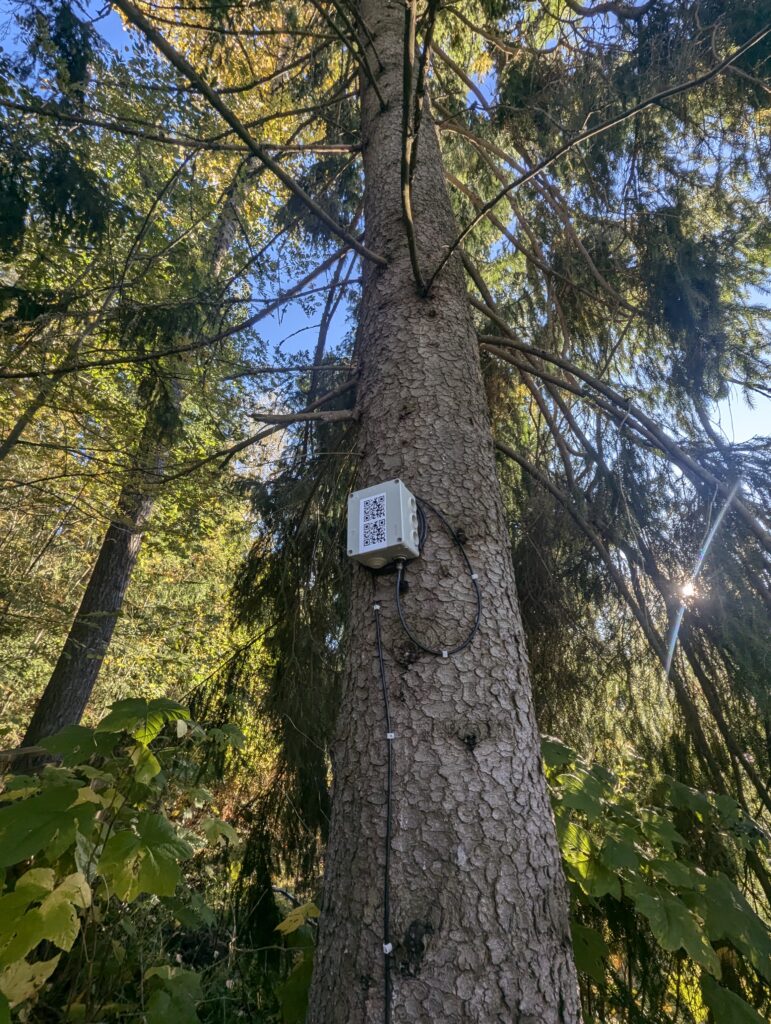
I currently run two Raspberry Pi computers on the BirdNET Pi platform. The first is in Salo town centre, recording urban birdlife. The second I installed in a tree in the Tupuri area, where it listens to bird sounds in a more natural setting.
Raspberry Pi is a small, affordable computer designed for education and hobby use. It is versatile and can be used for many kinds of projects, from home automation to media centres and research. The BirdNET Pi project uses the Raspberry Pi's ability to process sound and run machine-learning models, making it possible to identify and record bird sounds.
Installing the Tupuri bird box
Installing the Tupuri device was an adventure in itself. To get power to it I had to dig a cable trench about thirty metres long to run the power cable to the bird box in the tree. Internet required a creative solution, as there was no fixed broadband or nearby Wi-Fi. I used a standard USB modem with a Moi Mobile subscription. This setup has worked well despite the remote location.
The different locations have been especially interesting to compare. Urban and more natural settings differ in their birdlife in surprising ways.
Surprises from the night
One of the most fascinating aspects has been making observations at night. While most of us sleep, nature is still active. Tawny owl calls, nightjar churring and other nocturnal sounds have become familiar thanks to the devices. Following nocturnal migration has been particularly exciting. Sounds I would never otherwise hear are now recorded automatically.
Technical challenges and overcoming them
The journey has not always been smooth, especially with the device in the tree at Tupuri. The project has taught me that outdoor equipment needs constant attention and quick reactions when things go wrong.
Microphone failure
The first major setback was when the microphone in the Tupuri tree failed completely. The weather had taken its toll and moisture had reached the sensitive parts. This taught me a lot about protecting the microphone and correct installation. When I fitted the new microphone I improved the protection significantly, and so far the solution has held up.
Near miss with water damage
One of the most alarming moments was when water started seeping into the enclosure during heavy rain. I noticed in time and managed to save the equipment before serious damage. That near miss led to a complete redesign of the enclosure. The setup is now much better protected:
- Reinforced waterproof enclosure
- Improved ventilation to reduce condensation
- Extra seals at critical points
- Regular checks for possible leaks
Everyday challenges
In daily operation the main challenges remain:
- Wind and traffic sometimes cause noise that confuses identification
- Rain brings its own problems for recording
- In winter, snow and frost put the equipment to a tough test
I have still learned a lot from these challenges. Protecting the microphone from the elements has improved through trial and error, and judging the algorithm's accuracy has got better with experience.
The year in sound
One of the best things about the project has been following the annual cycle of birds systematically:
Winter
Regulars at the winter feeders, such as tits, bullfinches and nuthatches, keep the microphone busy. It has been interesting to see how wintering species differ between town centre and Tupuri. In winter, bird sounds are often calmer but still tell of survival in the cold. On frosty days activity at feeding sites increases noticeably.
Spring
Arriving migrants are like a digital spring calendar. First chaffinch songs, morning choruses of thrushes and the greetings of swallows mark the progress of spring. The system has revealed that some species regularly arrive earlier than I had thought. Spring is also when bird song is at its most varied and intense as they compete for territory and mates. That makes spring a particularly interesting time for sound recording.
Blue tit Cyanistes caeruleus
Summer
The breeding season is a feast of sound. Especially in the morning and evening the devices record an incredible amount of song from different species. It has been interesting to follow how activity varies through the day and how begging calls of young begin as nesting progresses. In summer, bird sounds also tell of breeding success and the growth of young. Many species' juveniles start practising their own songs, adding to the soundscape.
Autumn
Autumn migration shows up differently in the data than spring. Many species leave more quietly than they arrive, but the system still picks up nocturnal migration calls and contact calls of departing flocks. In autumn, bird sounds can feel more melancholic as they prepare for the long journey. This period offers a chance to study how different species communicate and keep in touch during migration.
Woodpigeon Columba palumbus
Lintunetti.fi: Sharing the data
The project led to the idea of Lintunetti.fi. I wanted a place where anyone could follow observations and learn about birds. Right now the site shows basic observation data, but development continues. Plans for the future include:
- Richer statistics on all observations
- Ability to listen to recordings
- Tools for analysing observations
- Year-on-year comparisons
Using Cloudflare Cloudflared
One technical highlight has been using Cloudflare's Cloudflared feature. Cloudflared makes it possible to expose the bird boxes' own web pages securely and simply. Using Cloudflared I have been able to create secure connections that give access to the bird boxes' real-time data and control panels from anywhere.
With Cloudflared I can:
- Show the bird boxes' live recordings and observations directly on the web
- Manage and configure the devices remotely without complex network setup
- Keep connections secure and reliable
This has made running the project much easier and enabled real-time monitoring and analysis that has been invaluable for studying bird behaviour.
Tech joke: Why do Cloudflare and Cloudflared sound so similar? Because they are like twins that never lose connection!
Another joke: Why don't birds use computers? Because they are afraid the mouse will eat their seeds!
Looking ahead
The BirdNET Pi project has taught me a huge amount about both birds and technology. Although automatic identification will never replace traditional birding, it adds a new dimension to it. Night-time observation in particular has opened my eyes (or rather my ears) to a whole new world.
You can follow observations at Lintunetti.fi and on the BirdWeather service at Salo stations #3142 and #5091. Welcome to follow the birdlife of the Salo area!
P.S. If you are interested in the project and want to know more about the technical setup or the observations, leave a comment below. I am happy to answer questions!